The best time to visit Victoria Falls depends on what you want to see. For the Falls at peak flow, visit March to May, with April typically the most dramatic (around 500 million litres per minute). For safari and wildlife, choose June to September. For Devil’s Pool, photography and adventure, aim for mid-September to early December. Victoria Falls is a true year-round destination – every season offers something distinct.
Quick-Pick Guide – When to Go
| What you want | Best months |
|---|---|
| Full-force waterfall & rainforest spray | March – May |
| Safari & wildlife | June – September |
| Clear Falls views & photography | August – October |
| Devil’s Pool swimming | Mid-September – December |
| White-water rafting (low water) | July – early December |
| Birdwatching & lush landscapes | November – February |
| Budget-friendly low season | November – December |
How Victoria Falls Changes Through the Year
Victoria Falls – known locally as Mosi-oa-Tunya, “The Smoke That Thunders” – is fed by the Zambezi River, which rises in the highlands of Angola and flows through Zambia before plunging over a 1.7-kilometre-wide basalt cliff between Zimbabwe and Zambia.
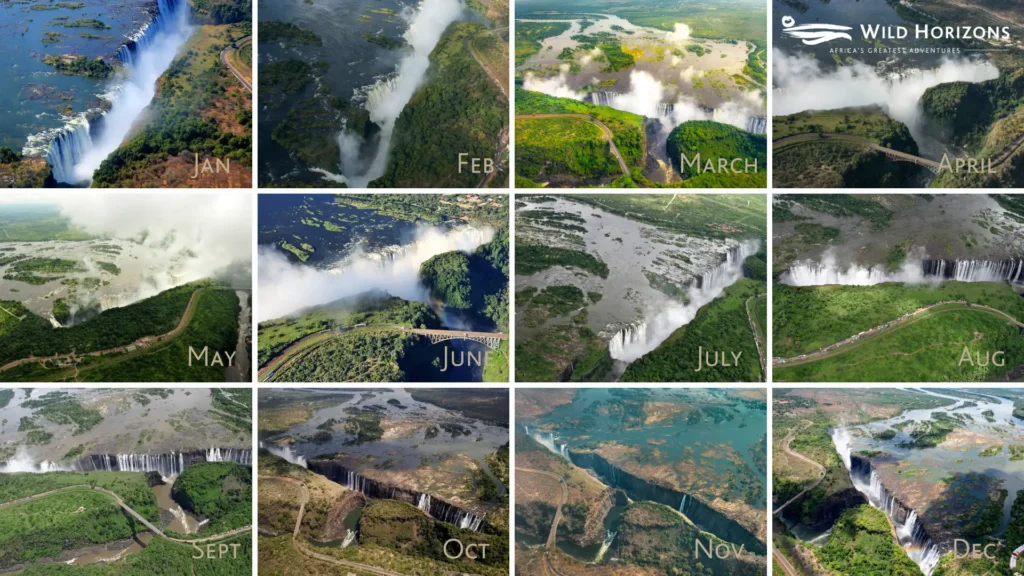
The river’s water levels lag two to three months behind the upstream rainy season, which is why the Falls peak in April and May, well after the local rains have eased. This creates two very different experiences across the year: the thundering, mist-shrouded spectacle of high-water season, and the clear, photogenic beauty of the dry season when you can see every detail of the gorge below.
Seasonal Overview at a Glance
| Months | Water level | Experience | Highlights |
|---|---|---|---|
| January – February | Rising | Lush, building flow | Green season, fewer crowds, dramatic build-up |
| March | High | Powerful & immersive | Strong flow, rainforest spray intensifies |
| April | Peak flood | Most dramatic views | Full curtain of water – iconic peak-flow experience |
| May – June | High | Misty & scenic | Peak viewing continues, heavy spray |
| July – August | Medium | Balanced | Best mix of visibility and activity access |
| September | Low | Clear views | Excellent visibility, reduced spray |
| October | Lowest | Access & photography | Best for Devil’s Pool & white water rafting |
| November – December | Rising | Transition season | First rains, river begins to build again |
Season-by-Season Breakdown
Autumn (March – May) – Peak Flow
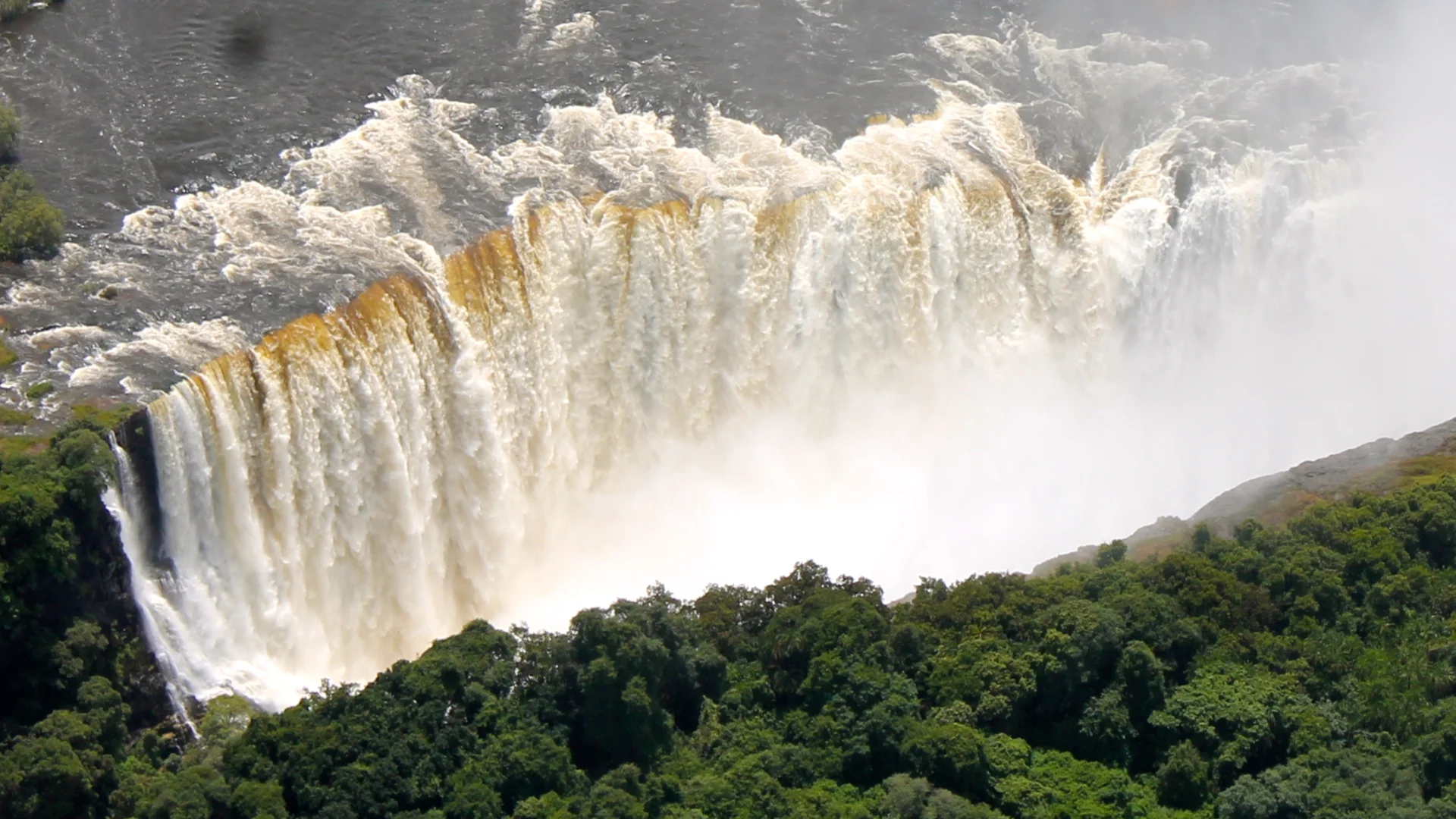
The most spectacular time to see the Falls at their peak, especially around April, when approximately 500 million litres of water cascade per minute (the highest recorded flow was 700 million litres in 1958). The river is full, the spray is immense and the sheer power is awe-inspiring. The rainforest remains lush… ideal for scenic walks. April is also the impala rut, with many dramatic interactions among the antelope.
Highlights: dramatic waterfall photography (expect mist on the lens), scenic helicopter flights, lush bush, lunar rainbow viewing during full moons.
[Explore our scenic flights and helicopter tours →]
Winter (June – August) – Safari Season
Dry, cool and crystal clear – this is peak travel and safari season. Game viewing is exceptional as animals gather at remaining water sources and the bush has thinned. Comfortable daytime temperatures around 25–28 °C (77–82 °F), and cool nights dropping to 6–11 °C (43–52 °F). The Falls are still flowing strongly, but with less spray you can see the full curtain of water for the first time. By mid-September, Devil’s Pool opens.
Highlights: game drives in Zambezi National Park, Hwange and Chobe; walking safaris; stargazing under brilliant winter skies; clear views of the Falls.
[See our safari lodges near Victoria Falls →]
Spring (September – November) – Adventure & Low Water
Hot, dry and dramatic. October is the warmest month — temperatures regularly above 35 °C (95 °F) and sometimes touching 40 °C (104 °F). Water levels are at their lowest, revealing the raw geology of the gorge and offering unique photo opportunities. The first tentative rains may arrive in November.
Highlights: Devil’s Pool, white-water rafting on the Zambezi, “Flight of Angels” helicopter trips with crystal-clear visibility, peak game viewing.
Summer (December – February) – Green Season
Hot and humid, with afternoon thunderstorms refreshing the landscape. The Falls begin to build again and the rainforest becomes lush and vibrant. Expect dramatic rainbows in the mist, and – with luck on full-moon nights – a beautiful lunar rainbow (moonbow). February brings the waterbuck breeding season and many nursing herds in the National Park.
Highlights: birdwatching (migratory species arrive in droves), lush Eden-like landscapes, lower-season rates, romantic getaways. Our Pay 2 / Stay 3 special is available at The Elephant Camp and Old Drift Lodge.
[See our green-season offers →]
Month-by-Month Guide
January – The Lush Awakening
Weather: Summer rains bring hot, humid days, average highs 29–31 °C (84–88 °F), with spectacular afternoon thunderstorms.
Falls: The Zambezi begins to swell, enhancing the waterfall’s flow. Mist rises high, visible from kilometres away.
Wildlife: The landscape flourishes. Game viewing is harder due to dense vegetation, but birdwatching is exceptional as many species nest and migratory birds are in full plumage.
Activities: High-water white-water rafting offers thrilling rapids. Rainforest walks immerse you in vibrant flora.
Traveller’s tip: Pack waterproof gear and embrace the refreshing showers that bring the landscape to life.
February – Romance Amidst the Rain
Weather: Thunderstorms keep the environment lush; average highs around 31 °C (88 °F). High humidity, with storms providing relief.
Falls: The waterfall reaches impressive volumes, mist visible from miles away, with vivid rainbows throughout the day.
Wildlife: Dense foliage means animals are dispersed, but the scenery is breathtaking. Waterbuck breeding season begins; many nursing herds.
Activities: Ideal for couples – secluded luxury lodges and intimate experiences. High-water rafting may continue depending on river levels.
Traveller’s tip: Book romantic experiences in advance, especially around Valentine’s Day.
March – Nature’s Grand Performance
Weather: Rainfall decreases as the wet season tapers – warm days, cooler nights, fresher air.
Falls: Approaching peak flow. The Falls thunder; mist can be dense, producing spectacular rainbows.
Wildlife: Migratory birds begin departing. Kudu and buffalo breeding peaks. The landscape remains lush.
Activities: Scenic flights provide breathtaking aerial views. Walking trails through the rainforest are atmospheric. Rafting is typically closed March–May (confirm with our reservations team — it varies by rainfall).
Traveller’s tip: Protect cameras, electronics and passports from the pervasive mist — a waterproof bag is essential.
April – The Majestic Peak
Weather: The rainy season concludes – warm days, pleasant evenings, averaging 28–30 °C (82–86 °F).
Falls: Victoria Falls reaches its zenith, with approximately 500 million litres per minute. The highest ever recorded was 700 million litres in 1958.
Wildlife: Verdant environment, animals dispersed. April is the impala rut – dramatic male displays and contests. Birding remains rewarding.
Activities: Some viewpoints may be obscured by heavy mist; consider helicopter tours for panoramic perspectives. This is the month for the Falls at their most powerful.Traveller’s tip: Wear waterproof clothing and sturdy shoes. You will get thoroughly soaked — embrace it.
May – Clarity and Contrast
Weather: Transitioning to dry season – clear skies, warm days, cooler nights. Humidity drops noticeably.
Falls: Water levels remain high but begin to recede slightly, reducing mist and significantly improving visibility across the gorge.
Wildlife: Deciduous trees start shedding leaves. Animals gradually move to permanent water sources, improving game viewing. Also the white-backed vulture and wild dog breeding season.
Activities: Excellent for photography with clearer views. Sunset cruises on the Zambezi are at their most serene.
Traveller’s tip: Evenings can be cool – pack layers for sundowner cruises and night drives.
June – Crisp Air and Clear Skies
Weather: Winter sets in – mild days 25–29 °C (77–85 °F), chilly nights to 7 °C (45 °F). Rainfall virtually zero.
Falls: Water flow still strong; significantly less spray makes this ideal for photography with the entire curtain of water visible.
Wildlife: Sparse vegetation and drying waterholes concentrate wildlife near the river – game drives in Zambezi National Park, Hwange and Chobe are particularly rewarding.
Activities: Game drives, walking safaris, stargazing under brilliantly clear winter skies. Low-water rafting season usually opens late May / June.
Traveller’s tip: Pack warm clothing for early morning and evening drives – temperatures can be surprisingly cool.
July – Safari Spectacular
Weather: Typically the coldest month – daytime around 25 °C (77 °F), nights as low as 6 °C (43 °F). Consistently clear skies.
Falls: Water levels drop gradually, leading to less mist and exceptionally clear views of the rock face and falling water.
Wildlife: Animals gather at remaining water sources in large numbers; one of the best months for game viewing in the region.
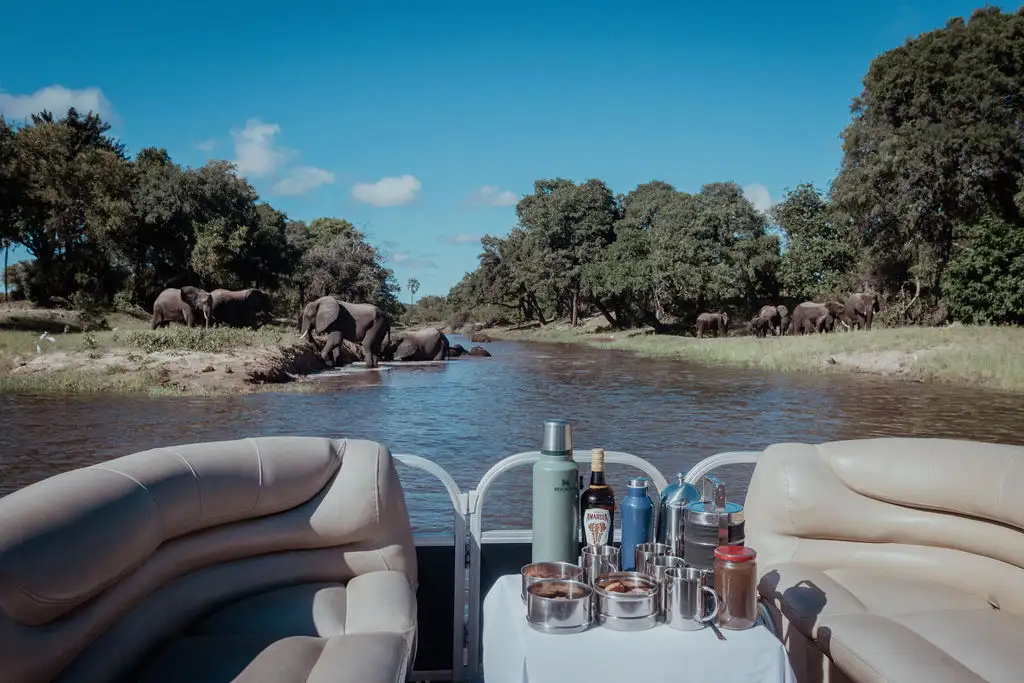
Activities: White-water rafting reopens fully. Safari drives are at their finest. Mopane leaves take on distinctive burnt-orange winter hue. Elephants increasingly seen crossing the mighty Zambezi River.
Traveller’s tip: Mornings are chilly – bring a warm jacket. Also a wonderful time for astrophotography of the Milky Way.
August – Adventure Abounds
Weather: Cool nights, warming days – highs 28–30 °C (82–86 °F). Still firmly dry season.
Falls: Water flow decreases further, revealing more of the dramatic rock face and providing unique photographic opportunities. The Falls transition to a series of distinct cascades.
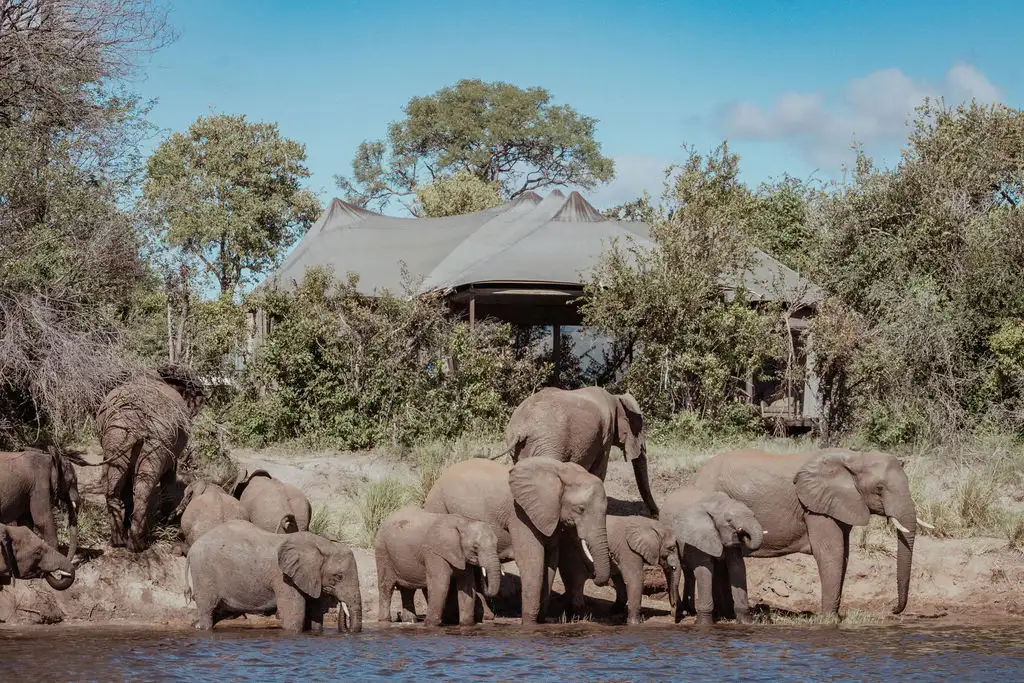
Wildlife: Elephants migrate to the riverbanks in impressive numbers. Game viewing remains excellent – prime month for spotting large herds.
Activities: A peak month for white-water rafting and gorge swing experiences.
Traveller’s tip: Book adventure activities and accommodation early – August is extremely popular with thrill-seekers.
September – Spring Awakening
Weather: Temperatures climb rapidly – average highs 34 °C (94 °F). Warm and slightly breezy, with around 10 hours of sunshine per day and virtually no rain.
Falls: The Falls flow on both sides of the gorge, though water levels can be low. Exposed basalt creates a dramatic contrast with the remaining cascades.
Wildlife: One of the finest months for wildlife viewing as the dry season peaks. Knob thorn acacia trees flower with the change of season; migrant birds start arriving from Europe and elsewhere in Africa.
Activities: Excellent for white-water rafting (multi-day expeditions usually start in mid-September). Devil’s Pool begins to open for swimming from mid-September.
Traveller’s tip: Stay well hydrated and wear sun protection. Book popular lodges early – September is high season.
October – The Scorching Build-Up
Weather: The hottest month – average highs 36–37 °C (97–99 °F), occasionally 40 °C (104 °F). First tentative rains may appear late in the month.
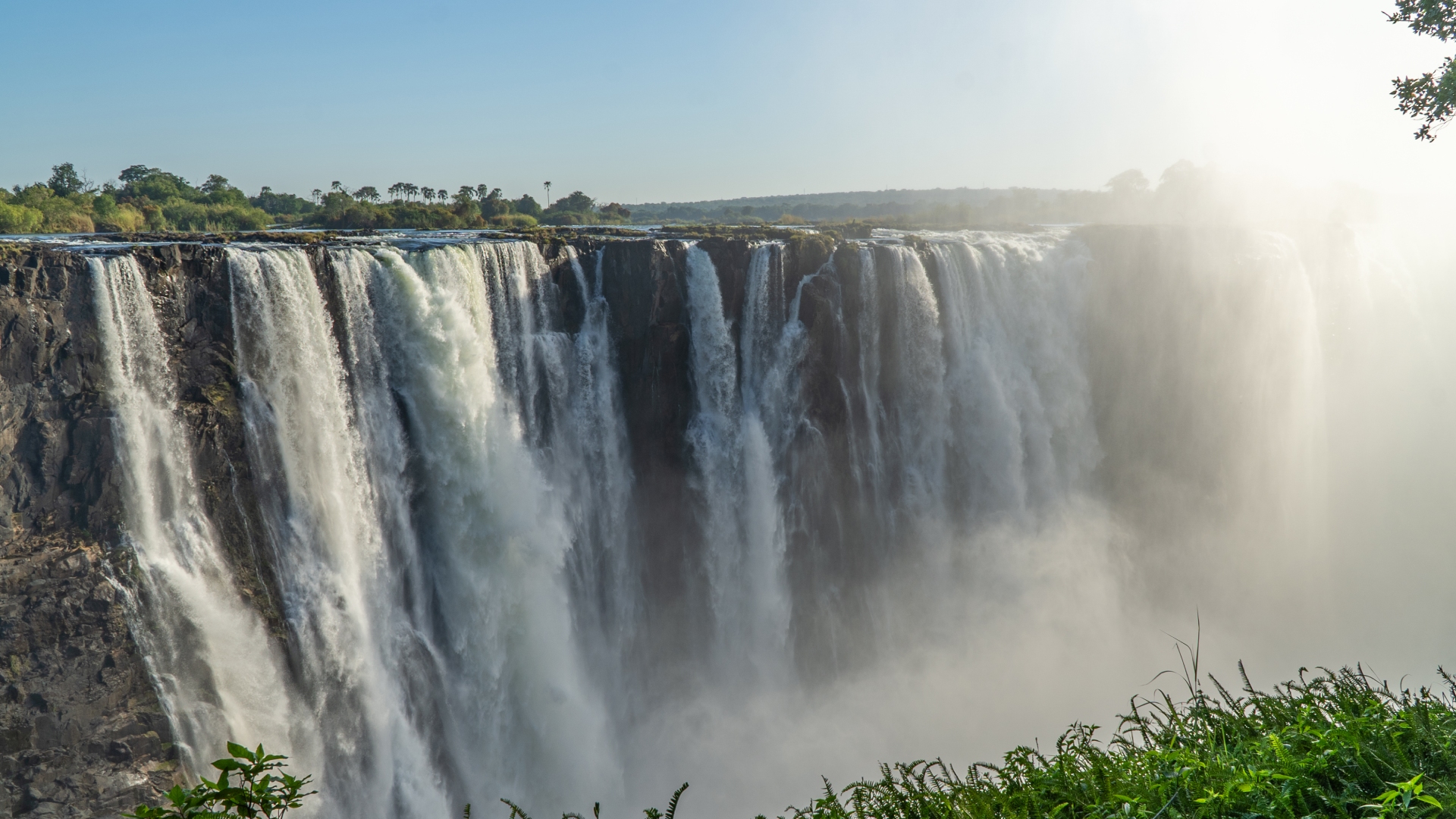
Falls: Water levels at their annual lowest. The Falls divide into several distinct streams, with sections of cliff face running dry – this reveals the spectacular geology of the gorge.
Wildlife: Optimal viewing as animals cluster at the few remaining water sources. Exceptional sightings on game drives.
Activities: Devil’s Pool swimming. Helicopter flights offer unmatched clarity. Photography of the gorge’s rock formations is at its best. Fantastic low-water white-water rafting.
Traveller’s tip: Heat can be intense… plan outdoor activities for early morning or late afternoon. Carry plenty of water; wear a hat and sunscreen.
November – The First Rains
Weather: Very hot – average highs around 33 °C (91 °F). The arrival of the first significant rains brings relief.
Falls: The Zambezi is at its lowest; the Falls can be reduced to a trickle on the Zambian side, though they continue flowing on the Zimbabwe side.
Wildlife: Migratory bird species begin arriving – excellent birdwatching season. Returning rains prompt fresh green growth.
Activities: Excellent white-water rafting with challenging rapids due to low water levels. Low-season rates begin at many lodges.
Traveller’s tip: November is the transition – heat eases slightly, the landscape begins to transform. Pack for both sun and rain.
December – The Green Transformation
Weather: Warm and breezy, average highs 31 °C (88 °F). The second-wettest month – regular afternoon thundershowers, dramatic and refreshing.
Falls: River levels remain relatively low, but rains are beginning to feed the Zambezi upstream. The Falls are less dramatic in volume, but the surrounding landscape transforms into lush greenery.
Wildlife: Less ideal for big-game spotting as vegetation thickens, but superb for birdlife – many migratory species in full plumage.
Activities: Last month for excellent low-water white-water rafting. The festive season brings a lively atmosphere to the town. Rainforest walks are increasingly atmospheric.
Traveller’s tip: Low-season rates still apply at many properties (usually excluding the Festive Season). Wonderful time for a festive escape combining adventure with the beauty of the green season.
Best Time to Visit by What You Want to Experience
- For full-force waterfalls and rainforest energy: March to May
- For photographers and adventurers: August to October
- For wildlife and safari lovers: the dry winter months (June to September)
- For birdwatchers: the green season (November to February)
- For budget travellers: November and December offer discounted low-season rates at many lodges
No matter the season, Victoria Falls offers unforgettable experiences. Whether you’re chasing waterfalls, tracking wildlife, or simply soaking in the landscape, there is always a reason to visit.
Frequently Asked Questions
March to May, peaking in April with approximately 500 million litres per minute.
Devil’s Pool typically opens from mid-September and remains accessible through to December, when water levels are low enough for safe swimming at the edge of the Falls.
June to September (dry winter season), when animals gather at water sources and vegetation is sparse, making wildlife easy to spot in Hwange and Chobe national parks.
Yes. Victoria Falls is one of the few places on Earth where moonbows (lunar rainbows) are visible during full moons, typically between midnight and 3am, best from February to August.
Absolutely. While water flow is lower, the dry season (June–October) offers unobstructed views of the Falls, exceptional game viewing, adventure sports, and ideal conditions for photography.
Three to four nights is ideal – enough time to see the Falls from both sides (where visa allows), enjoy a sunset cruise, do at least one adventure activity and one safari drive.
The Zimbabwe side offers the broader panoramic view and is the recommended starting point – around 75% of the Falls are visible from this side, and our lodges are located here.
Plan Your Victoria Falls Trip
Speak to one of our specialists, based at the Falls. We’ll match the right season,
lodges and activities to what you want from your trip.